
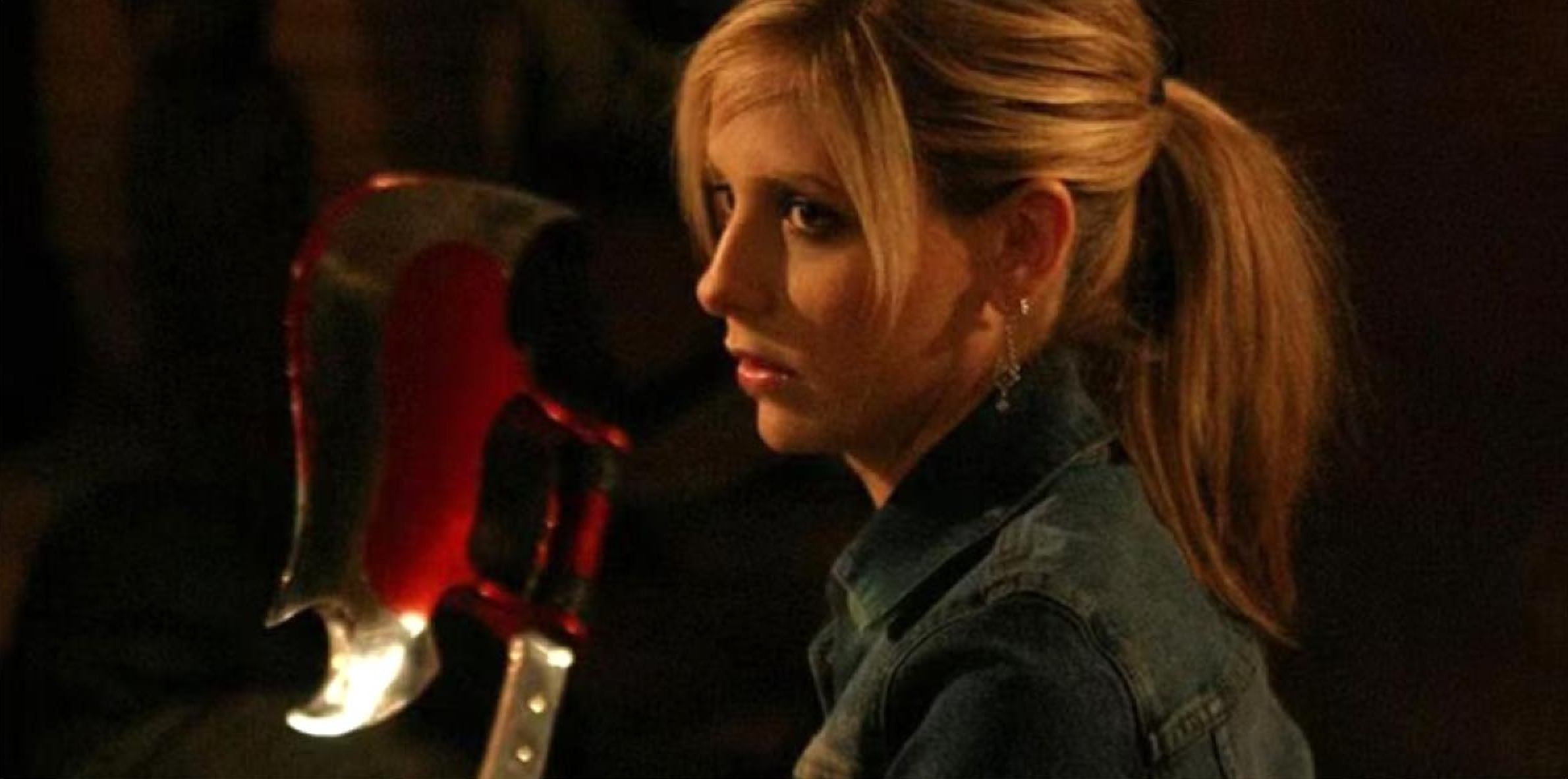
There are certain television shows that quietly shape a generation. They slip into our lives disguised as entertainment and then, years later, we realise they were doing something much deeper. As a psychodynamic therapist, I’ve always been struck by how Buffy the Vampire Slayer quietly explores many of the same themes that appear in therapy, trauma, identity, belonging, and the complicated work of facing our inner demons.
When I first watched it in the late 90s, I’ll be honest, I was mostly there for the vampires, the sarcasm, and the occasional leather coat worn with dramatic flair. But as the years passed (and as I eventually found myself working as a psychodynamic therapist), it became increasingly obvious that Buffy wasn’t just about monsters.
It was about growing up.
And growing up, psychologically speaking, can feel remarkably similar to battling vampires in a graveyard at 2am.
Now, with news that the series is attempting revival, and with Sarah Michelle Gellar once again associated with the project, it feels like the perfect moment to revisit why this show was always so psychologically rich.
Because beneath the supernatural drama, Buffy quietly explored some very real emotional truths about identity, trauma, relationships, and the complicated business of becoming yourself.
Why Buffy Resonated So Deeply With Viewers
On the surface, Buffy is a simple premise. A teenage girl discovers she is “the Slayer” — the one chosen to fight vampires, demons, and various forces of darkness.
But psychologically, the metaphor is rather elegant. Adolescence itself often feels like being handed a role you didn’t ask for. Suddenly there are expectations, responsibilities, and emotional challenges that arrive without much instruction.
Buffy doesn’t want to be the Slayer. She’d quite like to go to school, spend time with friends, and maybe have a relatively normal life. Which, if we’re honest, is exactly how many people feel about adulthood.
Psychodynamically speaking, Buffy is navigating the developmental task we all face: forming an identity while managing internal and external pressures.
Or, put more simply:
Trying to be yourself while the world throws monsters at you.
Vampires, Demons, and the Inner World
One of the reasons the show worked so well is that the monsters were rarely just monsters. They were metaphors.
In therapy, we often talk about the internal world — the collection of feelings, memories, fears, and relational patterns that live within us. Buffy’s world externalised those dynamics beautifully.
The Monster as Emotional Metaphor
Take vampires, for example. They often represent predatory relationships, charming on the surface but dangerous underneath.
Demons frequently embody overwhelming emotional states.
And some of the most memorable villains represent internal conflicts: shame, power, loneliness, rage.
In therapy, people often describe their struggles in similar language:
“It feels like something takes over.”
“It’s like I’m fighting something inside myself.”
Buffy simply gave those internal battles a set of teeth.
The Scooby Gang and the Psychology of Friendship
Another quietly powerful theme in Buffy is the role of relationships. Buffy might be “the chosen one,” but she rarely fights alone.
Her close-knit group of friends, affectionately known as the Scooby Gang, plays a crucial role in her survival.
From a psychodynamic perspective, this reflects something we know to be true psychologically:
No one develops in isolation.
We become ourselves through relationships.
Each character in Buffy reflects a different relational dynamic.
- Willow represents the search for identity and belonging.
- Xander embodies loyalty mixed with insecurity.
- Giles offers the complex parental figure, wise, supportive, but imperfect.
Together they create something therapy often aims to provide: a relational environment where vulnerability is possible.
Even the Slayer needs people.
Which, for many viewers, was a comforting reminder.
Trauma, Loss, and the Emotional Cost of Being Strong
One of the most striking things about Buffy is that it never pretends strength is easy. Buffy is strong because she has to be.
But the emotional cost of that strength is explored again and again. There are moments in the series where Buffy feels exhausted, isolated, or overwhelmed.
And that’s important.
Because many people grow up with the belief that being strong means being unaffected. Psychodynamically, strength often involves the opposite: the capacity to feel deeply while continuing to function.
Buffy grieves. She doubts herself. She struggles with relationships. She questions her role.
In other words, she behaves like a real human being navigating an extraordinary set of pressures.
And viewers recognised themselves in that.
The Parent Wound and Growing Into Yourself
Buffy also touches on another theme that frequently appears in therapy: the complicated relationship between young adults and their parents.
Buffy’s mother, Joyce, represents a loving but often bewildered parent trying to understand a daughter whose life is far stranger than she imagined.
There’s a poignant tension here.
Buffy wants to be understood.
Joyce wants to protect her.
But neither fully grasps the other’s world.
This mirrors a developmental truth we often explore in therapy:
At some point, we all realise our parents cannot fully understand who we are becoming.
And part of psychological growth involves accepting that reality while continuing to form our own identity.
It’s rarely neat.
But it is necessary.
The Shadow Self – Loving the Monster
One of the richest psychodynamic threads in Buffy is the theme of the shadow.
In psychology, the shadow refers to the parts of ourselves we struggle to acknowledge — anger, desire, aggression, vulnerability.
Buffy’s relationships with certain characters explore this beautifully. She is repeatedly drawn to figures who reflect darker aspects of herself. Not because she is reckless, but because psychologically we are often fascinated by the parts of ourselves, we don’t fully understand.
Carl Jung famously suggested that confronting the shadow is essential for psychological growth.
Buffy does this quite literally.
Sometimes with a wooden stake.
Why Does Buffy the Vampire Slayer Still Resonate Psychologically?
Rewatching Buffy today, what stands out most isn’t just the nostalgia.
It’s how emotionally perceptive the show was.
Long before “mental health conversations” became mainstream, Buffy was quietly exploring:
- identity
- loneliness
- trauma
- belonging
- grief
- moral complexity.
It treated young people’s emotional lives seriously, without losing its sense of humour.
And perhaps that humour was part of the magic. Because humour, much like in therapy, can create enough safety for difficult truths to emerge.
Buffy didn’t preach. It told stories.
And those stories often contained psychological insight disguised as supernatural drama.
The Revival and Why Returning to Sunnydale Feels Meaningful
The announcement that Buffy may be returning has stirred up a great deal of excitement.
Partly nostalgia, of course.
But also, something else. Many of the original viewers are now adults navigating careers, relationships, families, and, inevitably, their own internal battles.
Returning to Buffy now feels a bit like meeting an old friend who once helped us make sense of the world.
And perhaps still can.
Because the truth Buffy understood all along is this: The monsters don’t disappear when we grow up. They just become more psychological.
Fighting Inner Demons Isn’t Something You Have to Do Alone
One of the enduring lessons from Buffy the Vampire Slayer is that even the strongest characters need support.
Buffy may have been the Slayer, but she survived because she had people around her, friends who listened, challenged, supported, and occasionally reminded her who she was when she forgot.
In therapy, something similar happens.
People arrive often feeling as though they’ve been battling their own inner demons alone, anxiety, self-doubt, difficult family relationships, or patterns that seem to repeat themselves in ways that don’t quite make sense.
At Serenity of Mind Therapy, I offer psychodynamic therapy both online and in-person at my therapy rooms in Haywards Heath, West Sussex, and Crowborough, East Sussex.
Sometimes the monsters lose their power simply by being understood. Thankfully, therapy rarely requires wooden stakes. If any of the themes in this article resonate with you, the struggle to understand yourself, the impact of past relationships, or the sense that parts of your inner world feel difficult to face alone, you’re very welcome to contact me here.