
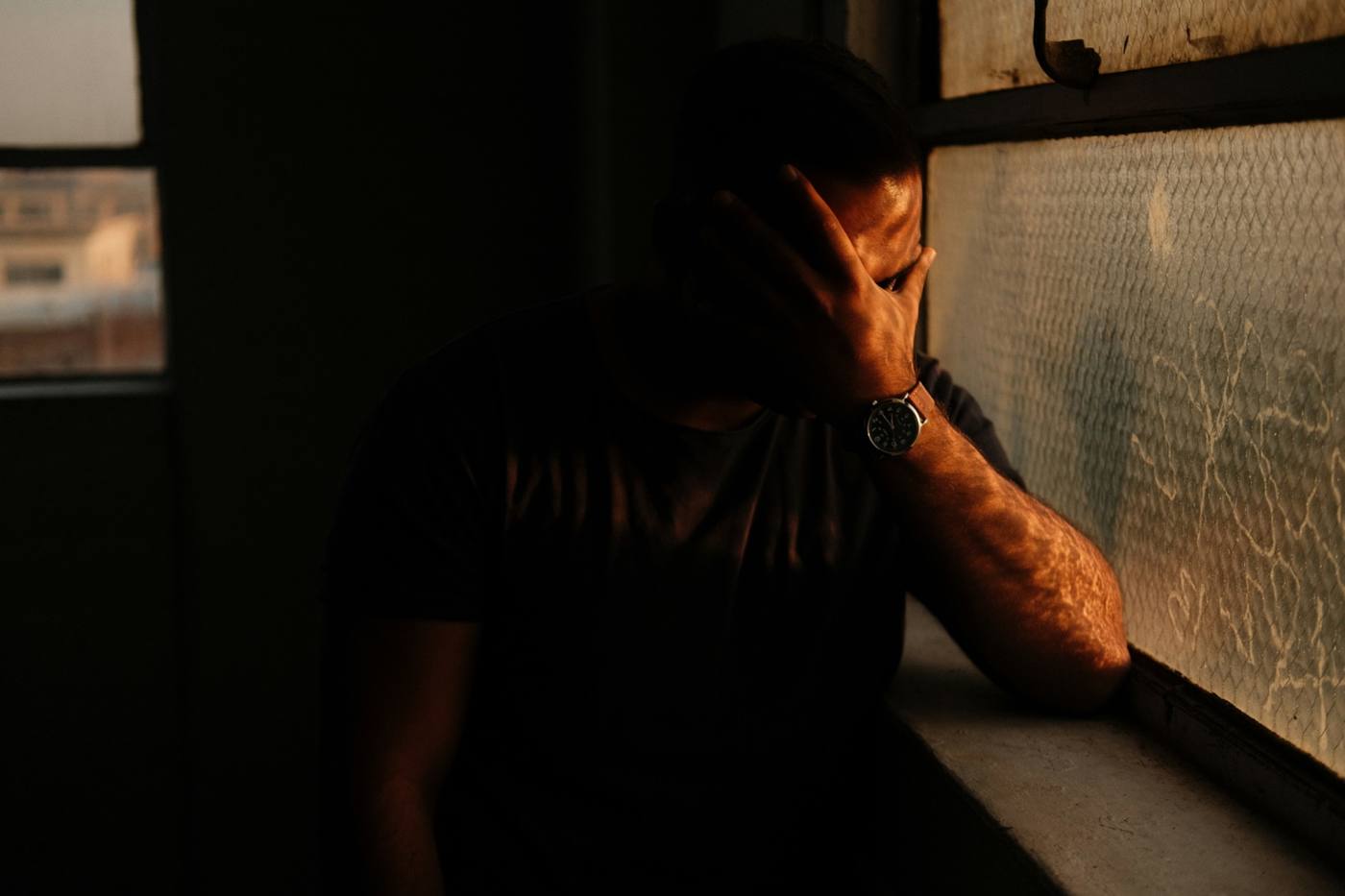
Abuse is one of those words that can make a room go quiet.
People hear it and often imagine extremes, bruises, police reports, doors slammed hard enough to shake the walls. And yes, abuse can look like that. Sometimes it does. But abuse can also arrive quietly. It can wear a charming smile. It can sit at a dinner table asking if you’re “really going to eat that?” in a tone so casual nobody else notices the sting. It can appear in relationships where everyone else thinks the person is wonderful.
That’s part of what makes abuse so psychologically confusing. It rarely begins as abuse.
If it did, most people would run a mile. Or at least briskly power-walk away while pretending not to make eye contact.
Instead, abuse often starts with attachment, longing, chemistry, hope, dependency, or familiarity. It develops slowly enough that the nervous system adapts to it. Human beings can adapt to almost anything, which is both one of our greatest strengths and, frankly, one of our more unfortunate design flaws.
As a psychodynamic therapist, I’ve often noticed that people minimise their experiences unless they can “prove” they had it bad enough. There is usually an internal courtroom taking place:
“They never hit me.”
“It wasn’t all the time.”
“They had a difficult childhood.”
“I’m probably too sensitive.”
“Other people have had worse.”
And somewhere inside that courtroom is a frightened part of the self quietly whispering, “But I think something hurt me.”
That voice matters.
What Abuse Actually Does to a Person
One of the most damaging aspects of abuse is not always the event itself, but the confusion it creates afterwards.
Abuse distorts reality. It teaches people not to trust their own instincts. Over time, many survivors become experts at self-doubt. They question their perceptions, minimise their feelings, and second-guess their memories.
You might notice someone apologising constantly. Becoming hypervigilant. Struggling to relax. Feeling guilty for having needs. Laughing while telling stories that are objectively upsetting.
Humour, incidentally, is one of humanity’s great psychological survival tools. If we can laugh while describing emotional devastation, perhaps we can avoid fully feeling it for a moment longer. Therapists notice this. We often smile gently alongside clients while internally thinking, “Ah… there’s the pain underneath the punchline.”
Abuse can affect every layer of a person’s internal world:
- Self-worth
- Trust
- Emotional regulation
- Relationships
- Sexuality
- Identity
- Boundaries
- Safety
- Confidence
- The ability to rest
Many survivors become deeply attuned to other people’s moods because they had to be. If you grew up needing to detect emotional weather changes faster than the BBC forecast, your nervous system may still be scanning rooms long after the danger has passed.
The body remembers what the mind tries to rationalise away.
Emotional Abuse and the Injuries Nobody Else Sees
Emotional abuse is particularly difficult because there are often no visible scars.
No cast. No bruise. No dramatic soundtrack playing in the background.
Just a gradual erosion of the self.
Emotional abuse can include:
- Criticism
- Humiliation
- Control
- Manipulation
- Gaslighting
- Silent treatment
- Intimidation
- Chronic invalidation
- Threats
- Conditional affection
Over time, people can begin shrinking themselves to avoid conflict. They become quieter, more cautious, more anxious. They may stop expressing opinions. Stop asking for help. Stop taking up emotional space altogether.
And perhaps one of the saddest things about emotional abuse is that survivors often become incredibly compassionate toward the abuser while remaining astonishingly cruel toward themselves.
They understand why the other person behaved the way they did. They can explain the trauma, the stress, the addiction, the shame, the childhood wounds.
But they struggle to extend the same empathy inward.
Psychodynamically speaking, this often reflects earlier relational patterns. Many people learned early in life that love required emotional adaptation. Keep the peace. Don’t upset anyone. Stay useful. Stay pleasing. Stay small enough to be accepted.
Children are remarkably intelligent observers of emotional environments. If safety depends on managing another person’s feelings, they will attempt it. The problem is that children eventually become adults who still feel responsible for everyone else’s emotional state.
Exhausting, really.
Why People Stay in Abusive Relationships
This is the question society asks survivors far too often, and usually with an undertone of judgement.
“Why didn’t you just leave?”
The truth is that abusive relationships are psychologically complex. People stay for many reasons:
- Fear
- Financial dependency
- Trauma bonding
- Shame
- Love
- Children
- Isolation
- Hope
- Conditioning
- Low self-esteem
- Cultural pressures
- Previous experiences of abuse
And sometimes people stay because the relationship is not abusive all the time.
That inconsistency is psychologically powerful.
Moments of kindness become emotionally intoxicating because they provide relief from fear and uncertainty. The nervous system clings to hope. Survivors often describe feeling addicted to the “good version” of the person.
This is one reason abuse can feel so disorientating. The abuser may genuinely appear loving at times. They may apologise sincerely. Cry convincingly. Promise change passionately.
And the survivor desperately wants to believe it because human beings are wired for attachment.
We don’t simply bond through love. We also bond through unpredictability.
Childhood Abuse and the Adult Self
Childhood abuse leaves particularly deep psychological fingerprints because children naturally assume that what happens around them is somehow about them.
A child who is criticised repeatedly may grow into an adult who feels fundamentally defective.
A child who is ignored may become an adult terrified of abandonment.
A child exposed to rage may become hyper-independent and emotionally guarded.
The adult personality often develops around old survival strategies.
Sometimes therapy involves recognising that what once kept you safe is now keeping you stuck.
The fiercely independent person who “doesn’t need anyone”? That may once have been a lonely child who discovered relying on others felt dangerous.
The chronic people-pleaser? Often someone who learned love was conditional.
The emotionally numb individual who says, “I don’t really feel much”? Sometimes a nervous system that wisely shut down overwhelming feelings years ago.
There is usually logic beneath psychological symptoms, even when that logic was formed in painful circumstances.
The Shame That Abuse Leaves Behind
Shame is one of abuse’s most enduring legacies.
Not guilt, shame.
Guilt says: “I did something bad.”
Shame says: “I am bad.”
Many survivors carry a deep sense of contamination or defectiveness. They may believe they deserved what happened or that something about them invited mistreatment.
Abuse often transfers responsibility away from the perpetrator and into the psyche of the survivor.
This is especially true in emotionally manipulative dynamics where blame becomes chronically distorted:
“You’re too sensitive.”
“You make me act this way.”
“You’re impossible to love.”
“No one else would put up with you.”
Over time, these messages can become internalised until the abuser no longer needs to say them aloud because the survivor has begun repeating them internally.
And that is one of the cruellest aspects of abuse, the voice of the abuser can survive long after the relationship ends.
Healing From Abuse Is Rarely Linear
Healing is deeply non-linear.
Annoyingly so, if we’re honest.
People often assume recovery should look like a steady upward trajectory: insight, growth, empowerment, inspirational Instagram quote, closure. Preferably within six months.
Real healing is messier.
There are good weeks followed by difficult days. Moments of strength interrupted by grief. Sudden triggers that seem to come from nowhere. Survivors may feel angry one day and deeply longing the next.
This does not mean they are “failing” at healing.
Trauma lives in layers.
Therapy can help people understand not only what happened to them, but how those experiences became woven into their relationships, identity, and emotional world. Psychodynamic therapy, in particular, pays attention to patterns that repeat unconsciously, the relationships we recreate, the defences we build, the painful beliefs we carry forward without realising.
Because often the effects of abuse do not end when the abusive situation ends.
Sometimes the relationship continues internally.
Learning That Safety Can Feel Unfamiliar
One of the strangest aspects of recovery is that healthy relationships can initially feel uncomfortable.
If someone grew up around volatility, criticism, unpredictability, or emotional withdrawal, calmness may feel suspicious. Kindness may feel unfamiliar. Stability may even feel boring.
Human beings are drawn toward what feels emotionally familiar, not necessarily what is healthy.
This is why survivors sometimes find themselves repeating painful relational patterns despite consciously wanting something different. The nervous system tends to recognise familiarity before it recognises safety.
Therapy can gently help people begin distinguishing between intensity and intimacy.
They are not the same thing.
A relationship that keeps you emotionally anxious is not necessarily passionate. Sometimes it is simply activating old attachment wounds while your nervous system mistakes survival chemistry for love.
Which is rather inconvenient from an evolutionary perspective.
Reaching Out for Support After Abuse
One of the hardest things abuse can take from someone is the ability to trust, particularly trust in other people, and often trust in themselves.
Reaching out for support can therefore feel frightening, exposing, or even undeserved. Many people worry they are “making a fuss,” being dramatic, or taking up too much space. But pain does not have to reach catastrophic levels before it deserves care.
At Serenity of Mind Therapy, I can offer psychodynamic therapy both online and in-person at my therapy rooms in Haywards Heath, West Sussex, and Crowborough, East Sussex.
Therapy offers a space where experiences can be spoken aloud without judgement, minimisation, or pressure to “just move on.” Sometimes healing begins simply by having another human being sit alongside the parts of yourself that have carried fear, shame, confusion, or loneliness for far too long, so feel free to reach out and contact me here.