
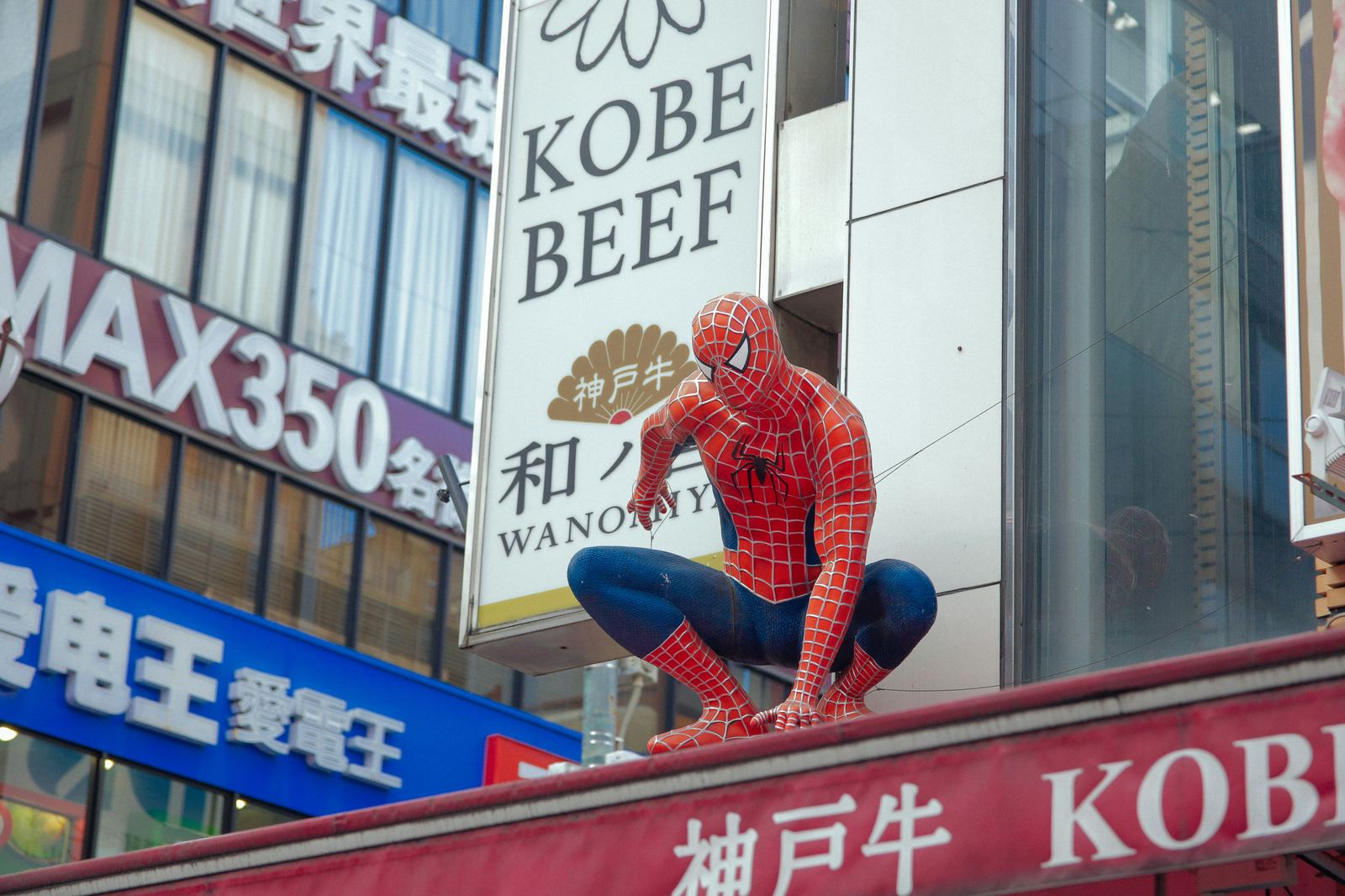
I did not expect to leave a superhero film blinking back tears over attachment theory, but here we are. Somewhere between the web-slinging and the inevitable third-act punch-up, Spider-Man: Brand New Day quietly turns into one of the more honest portraits of grief I’ve watched on a big screen in years. Underneath the CGI is something much smaller and much more familiar: a young man who has lost almost everyone who ever made him feel real, and doesn’t quite know who he’s meant to be without them.
That’s the bit that stayed with me. Not the mutation subplot, not the fights. The flowers.
The Flowers He Keeps Bringing
Early on, we see Peter visiting Aunt May’s grave, again and again, across seasons, across years. He brings flowers. He talks to a headstone. It’s such an ordinary, unglamorous kind of grief, not the dramatic collapse we’re taught to expect, but the low hum of someone quietly keeping a relationship alive after the other person is gone.
This is what mourning actually looks like most of the time. Not a single cathartic scene. A Tuesday. A bunch of garage-forecourt flowers. A conversation with someone who can’t answer back.
In the therapy room, I hear versions of this constantly. Not always about death, either.
“I still text them sometimes,” one client told me, years after a relationship had ended. “I just don’t send it.”
That’s Peter at the graveside. That’s grief doing what it does, refusing to be tidy, refusing to end on schedule, insisting on its own strange rituals long after everyone else has stopped asking how you’re doing.
When No One Remembers You Were Ever There
Here’s where the film gets properly psychodynamically interesting. Peter isn’t only grieving May. He’s grieving a version of himself that the people he loves can no longer see. MJ and Ned are alive, well, thriving even, and they don’t remember him. He can stand in front of them and get nothing back. No recognition. No shared history. Just polite, blank confusion.
Grief theory has a name for loss that the world doesn’t acknowledge: disenfranchised grief. It’s the loss nobody sends a card for. The friendship that quietly dissolved. The version of you that existed in someone else’s eyes before they stopped looking.
Identity, from a psychodynamic viewpoint, isn’t something we hold entirely on our own. We are, in part, made up of how we exist in other people’s minds, a face in the crowd who lights up when we walk in, a name someone still uses affectionately. Winnicott would say we first come to know ourselves by seeing ourselves reflected back. Strip that away and something genuinely destabilising happens.
Watching Peter get a blank look from Ned, his oldest friend, was the moment the film stopped being about superpowers for me. It became a film about what happens when the mirror stops reflecting you back.
I think most of us know that particular vertigo, even in far less dramatic circumstances. Ageing parents who no longer recognise us. Old friends who’ve moved on. Being forgotten is its own species of loss, and it rarely gets the sympathy that a death does.
Busy Is a Kind of Hiding
Peter spends four years being Spider-Man full time. Alone. Constantly moving. On paper, this reads as dedication, maybe even heroism. Psychodynamically, it reads as something else entirely: avoidance dressed up in a very convincing costume.
If he stops swinging, he has to land somewhere. And landing means sitting still with the quiet — the empty flat, the absence of May, the friends who don’t know his name anymore.
I say this with the deep affection of someone who has, at various points in my own life, alphabetised a bookshelf rather than open an email I was dreading. Busyness is one of the most socially acceptable defence mechanisms we have. Nobody worries about the person who’s always doing something.
“I don’t really have time to think about it,” is a sentence I hear often, usually said with genuine relief, as though not-thinking were a personal achievement.
It can look, from the outside, remarkably like coping. From the inside, it’s often closer to outrunning something you’re not ready to feel yet. Peter’s crime-fighting marathon isn’t a character flaw. It’s a nervous system doing exactly what nervous systems do after trauma, staying activated, staying useful, staying anywhere except still.
The Cast as a Hall of Mirrors
What I liked most, structurally, is how the film surrounds Peter with characters who are essentially different grief responses wearing different costumes.
Frank Castle: Grief Turned Outward
The Punisher is what happens when loss curdles into punishment, when the unbearable helplessness of losing someone gets converted into control, into violence, into a mission that never quite fills the hole it’s meant to. It’s an extreme, cinematic version of something very human: turning pain outward because turning it inward felt unsurvivable.
Bruce Banner: Fear of Your Own Nature
Banner’s arc is quieter but just as psychodynamic, a man permanently braced against a part of himself he doesn’t trust. That’s not far from clients who describe feeling like they’re managing an internal threat at all times, monitoring their own anger or need or vulnerability like it might go off if they relax.
Jean Grey: Trauma as Intrusion
Then there’s Jean, a telepath who can enter Peter’s memories uninvited. It’s hard not to read this as a fairly literal depiction of intrusive memory and trauma, the sense that your own inner world isn’t fully private anymore, that something can walk in without knocking.
Put together, this isn’t just a crowded ensemble for the sake of spectacle. It’s grief, refracted through several different defence styles, all orbiting one very tired young man trying to work out who he’s supposed to be now.
More Spider, Less Man
There’s a smaller, stranger thread running through Brand New Day about Peter’s powers mutating, his abilities becoming less predictable, less human, more arachnid. It’s played for body-horror tension, but underneath it sits a familiar psychological question: what happens to identity under prolonged stress?
Trauma doesn’t just live in memory. It reshapes how we inhabit our own bodies. Clients often describe a version of this, feeling like they’re operating on autopilot, watching themselves from slightly outside, no longer quite sure which reactions are “them” and which are the trauma talking.
Peter becoming “more spider, less man” is a comic-book metaphor for something a lot of us recognise without the radioactive backstory: the fear of losing yourself inside your own coping mechanisms.
Why a Superhero Film Makes a Decent Therapist
Grief, disenfranchised loss, hypervigilance, identity built through the eyes of others, trauma living in the body, Brand New Day manages to smuggle in most of the syllabus of a psychodynamic training course under the guise of a summer blockbuster. Peter Parker doesn’t need a radioactive spider to teach us something true. He needs to keep visiting a grave nobody else remembers, and to be forgotten by the people who used to know him best, and to stay endlessly, exhaustingly busy so he doesn’t have to feel any of it.
Most of us have done some version of all three.
Reaching Out for Support
If any of this has struck a chord, the low hum of a loss that never quite got acknowledged, the exhaustion of staying busy so you don’t have to feel it, or simply the unsettling sense of not quite recognising yourself lately, you don’t have to work through it alone, and you certainly don’t need a radioactive spider bite to justify asking for help.
At Serenity of Mind Therapy, I offer psychodynamic therapy both online and in-person at my therapy rooms in Haywards Heath, West Sussex, and Crowborough, East Sussex, working with grief, loss, trauma and identity in a way that makes space for the parts of the story that don’t tie up neatly by the credits. If you’d like to talk, I’d be glad to hear from you, contact me here.